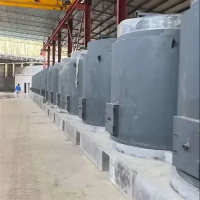
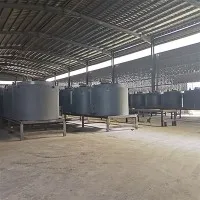
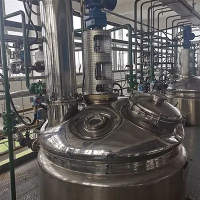
(1) Installation Location: The reactor should be installed in a high-pressure operating room that meets explosion-proof requirements. When multiple reactors are installed, they should be placed separately, with each pair separated by a safe explosion-proof wall. Each operating room should have a passage and exit to the outside. Good ventilation should be ensured when explosive media are present.
(2) After opening the packaging, check the equipment for damage. Assemble the equipment according to the structural diagram based on the equipment model. Verify all included parts against the packing list. If the heating method is electric heating with thermal oil, purchase the appropriate type of thermal oil according to the operating temperature (Note: the thermal oil must not contain water). When adding the oil, open the oil filler port on the upper part of the jacket and the oil level port on the upper part of the jacket. Add oil through the filler port until oil flows out of the oil level port; then tighten the oil level port. Do not tighten the filler port completely to avoid pressure buildup.
(3) Installation and sealing of the vessel body and lid: The vessel body and lid are made of gaskets or conical surfaces in line contact with the arc surfaces. Tightening the main nut presses them together to achieve a good sealing effect. When tightening the nut, it must be done diagonally and symmetrically, gradually increasing the force multiple times, ensuring even force. The lid must not be tilted to one side to achieve a good sealing effect. When tightening the main nut, the specified tightening torque of 40~120 N.M must not be exceeded to prevent damage to the sealing surface or excessive wear. Special care should be taken with the sealing surfaces. Before each installation, wipe the upper and lower sealing surfaces clean with soft paper or cloth, paying particular attention to avoiding scratches on the sealing surfaces of the vessel body and lid. With proper operation, it can be used tens of thousands of times. If the sealing surface is damaged, it needs to be re-processed and repaired to achieve good sealing performance. When removing the lid, lift it slowly up and down to prevent the sealing surfaces between the vessel body and lid from colliding. If the seal uses gaskets (PTFE, aluminum, copper, asbestos, etc.), a good sealing effect can be achieved by tightening the main nut.
(4) For valves, pressure gauges, and safety valves, tightening the positive and negative nuts achieves a sealing effect. The arc-shaped sealing surfaces at both ends of the connection must not rotate relative to each other. All screw connections must be lubricated with a mixture of lubricant and oil during assembly to prevent seizing. Valve usage: Needle valves use line seals; simply rotate the valve needle gently to press the sealing surface to achieve a good seal. Do not use excessive force to avoid damaging the sealing surface.
(5) After the equipment is installed, pressurize it with a certain amount of nitrogen for 30 minutes and check for leaks. If a leak is found, use soap suds to locate the leak point in the pipeline or at the pipe opening. After locating the leak, release the gas and tighten the screws. Pressurize again with nitrogen to ensure there are no leaks before commencing normal operation. (6) During cooling, internal cooling can be achieved using water through the cooling coil. Rapid cooling is prohibited to prevent excessive thermal stress, which could cause cracks in the cooling coil and the vessel body. During operation, when the internal temperature exceeds 100℃, cooling water should be circulated between the magnetic stirrer and the vessel lid to ensure the water temperature remains below 35℃, preventing demagnetization of the magnet.
(7) Safety Device: A positive arch-shaped metal rupture disc is used, made of stainless steel, manufactured according to national standard GB567-89 "Technical Conditions for Arch-Shaped Metal Rupture Discs." It has been tested at the factory and should not be adjusted arbitrarily. If it has already ruptured, it must be replaced. The replacement period is determined by the user based on their actual situation. Discs exceeding their rated rupture pressure without rupture should be replaced. For frequent use, the pressure should ideally not exceed 80% of the lower limit of the rupture disc. When replacing, ensure the convex side of the rupture disc faces upwards.
(8) After the reaction is complete, first cool the vessel to lower the temperature, then release the gas inside through the pipeline to the outside, reducing the pressure inside the vessel to atmospheric pressure. Disassembly under pressure is strictly prohibited. Then, loosen and remove the main bolts and nuts symmetrically. Carefully remove the vessel lid (or lift the lid) and place it on the support. During lid removal, pay special attention to protecting the sealing surface.
(9) Cleaning inside the vessel: After each operation, use a cleaning solution (avoid corroding the main material) to remove any residue from the vessel body and sealing surfaces. Clean frequently and keep the vessel clean. Do not use hard materials or rough surfaces for cleaning.