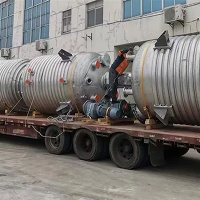
Stainless steel reactors offer advantages in robustness and durability, and can withstand high temperatures and pressures. During circulating heating, the material temperature is determined by the temperature of the heat transfer oil. With jacketed electric heating, the material can be heated to 260 degrees Celsius, and with direct-drive electric heating, it can reach 400 degrees Celsius. The internal pressure can range from negative pressure to tens of kilograms, ensuring thorough stirring and reaction.
Enameled reactors, on the other hand, prioritize corrosion resistance. They use carbon steel as the main body, with a sintered enamel layer on the inner cylinder, stirring paddle, and other parts in contact with the material to isolate the material from the carbon steel body and prevent corrosion. The material temperature in enamel-lined reactors must not exceed 200 degrees Celsius, otherwise the enamel layer will melt, damaging the equipment. Due to its special structure, the internal pressure cannot exceed 4 kilograms.
High-pressure reactors select between mechanical and magnetic seals based on the material characteristics. Magnetic seals are recommended for materials with low viscosity and special properties; mechanical seals are suitable for materials with low viscosity and no special properties.
Coil reactors come in two types: internal coil and external coil. The inner coil comes into contact with the material, hindering its flow and making mixing difficult. However, the inner coil has a large heat exchange area and high heat utilization rate. The outer coil, on the other hand, is a semi-circular tube welded to the outer wall of the reactor body, acting as a reinforcing rib. This allows for a reduction in plate thickness, thereby lowering the manufacturing cost of the reactor.