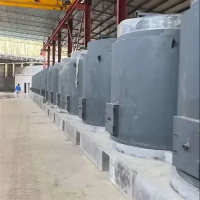
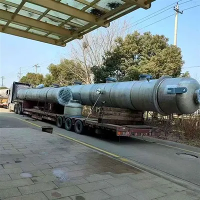
Heat exchangers are suitable for different media, operating conditions, temperatures, and pressures, and their structures vary. The specific classifications of heat exchangers are as follows:
Classification by Heat Transfer Principle:
1. Indirect Heat Exchanger: Two fluids at different temperatures flow in a space separated by a wall. Heat exchange occurs between the two fluids through heat conduction at the wall surface and convection at the wall surface. Indirect heat exchangers include shell-and-tube, coaxial, and other types. Indirect heat exchangers are the most widely used type.
2. Regenerative Heat Exchanger: Heat is transferred from a high-temperature fluid to a low-temperature fluid through a heat storage medium composed of solid material. The hot medium first passes through the solid material to reach a certain temperature, and then the cold medium is heated by the solid material, thus achieving heat transfer. Regenerative heat exchangers include rotary and valve-switching types.
3. A fluid-connected indirect heat exchanger connects two surface heat exchangers via a circulating heat transfer medium. The heat transfer medium circulates between the high-temperature fluid and the low-temperature fluid, receiving heat in the high-temperature fluid and releasing it to the low-temperature fluid in the low-temperature fluid.
4. A direct-contact heat exchanger, also known as a mixing heat exchanger, involves two fluids in direct contact and mixing for heat exchange. Examples include cooling towers and gas condensers.
5. A combined heat exchanger combines the advantages of both steam-water surface indirect heat exchange and direct water-water mixing heat exchange. Compared to steam-water surface indirect heat exchange, it offers higher heat exchange efficiency; compared to direct steam-water mixing heat exchange, it provides higher stability and lower unit noise.