Product Positioning
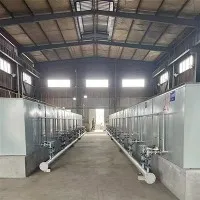
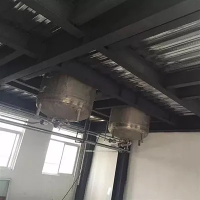
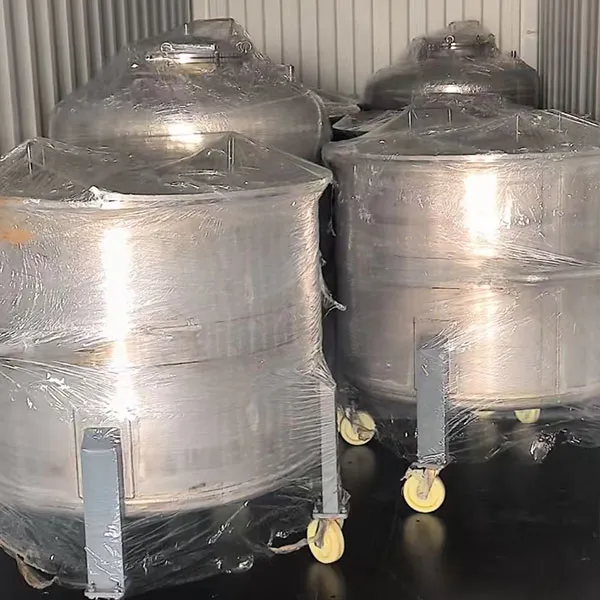
The acrylic mixing tank serves as a core intermediate processing unit within the acrylic sheet manufacturing workflow, specifically dedicated to the homogenization of materials following the cooling phase of the cooking process but prior to sheet formation. Its primary mission is to address issues - such as temperature gradients and compositional segregation - that frequently arise in cooled acrylic prepolymer or monomer mixtures through precise temperature control and highly efficient agitation. By ensuring that the material consistently maintains uniformity, fluidity, and stability, this equipment supplies high-quality raw materials to subsequent pressing, casting, or extrusion molding operations, thereby serving as a critical component in guaranteeing the ultimate quality of the finished acrylic sheets.
Core Features and Design Highlights
Addressing the characteristic significant increase in viscosity - ranging from 50 to 5,000 cP - that occurs in acrylic materials after cooling, we have innovatively adopted a dispersion-disc agitator design to enhance both axial and radial mixing effects. This structural configuration effectively breaks down localized gel clusters and residual undissolved initiators within the material, achieving a mixing uniformity of up to 99.8%. By providing a raw material base with highly consistent composition right from the source, this process establishes a solid foundation for the quality of the finished acrylic sheets.
Rapid Discharge Design: Featuring a conical-bottom structure, the system allows materials to naturally converge at the vessel's base under the force of gravity. Coupled with a smooth, obstruction-free discharge channel, this design facilitates the rapid transfer of homogenized materials to downstream sheet-manufacturing equipment. This significantly reduces the material's residence time within the vessel, thereby enhancing the overall efficiency of the production workflow integration.
Core Advantages of the Equipment

(1) Eliminating Plate Manufacturing Defects at the Source
Leveraging robust mixing capabilities, the system effectively eliminates hidden micro-bubbles, undissolved particles, and other impurities present in the material after cooling. This significantly reduces defects - such as crystal spots, streaks, and density irregularities - during subsequent plate production. The resulting homogenized material ensures structural uniformity throughout the plate-forming process, thereby substantially enhancing core performance attributes - such as optical transparency and physical strength - and bolstering the product's market competitiveness.
(2) Dual Excellence in Adaptability and Reliability
Precise Material Compatibility: Addressing critical industry pain points - specifically the susceptibility of cooled acrylic materials to spontaneous polymerization and significant viscosity fluctuations-the system features a customized structural and process design. This approach inhibits material degradation at the equipment level, thereby guaranteeing the stability and integrity of the raw materials.
Typical Application Workflow
Feeding Stage
The cooled acrylic mixture flows smoothly into the mixing tank via gravity feed, preparing it for the subsequent homogenization process.
Homogenization Stage
Under preset temperature conditions, the mixing mechanism is activated to provide continuous agitation for 15–30 minutes; this ensures the uniform distribution of material components while simultaneously inhibiting oxidation and degradation, thereby maintaining the material's optimal quality.
Inspection Stage
In-line monitoring equipment is utilized to precisely track key parameters - such as viscosity and solid content - in real time. Based on these readings, auxiliary agents (such as leveling agents and defoamers) can be flexibly added to ensure the material fully complies with the required standards for sheet manufacturing.
Discharge Stage
A bottom-discharge valve facilitates the smooth transfer of the homogenized, quality-verified material to downstream sheet-forming equipment - including casting, pressing, or extrusion machinery - thereby ensuring a seamless transition between process stages.
Hot Tags: acrylic mixed tank, China acrylic mixed tank manufacturers, suppliers, factory