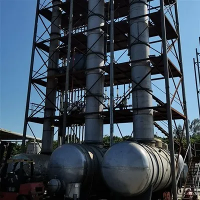
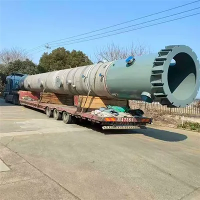
1. Suitable for molding large and extra-large parts. Most plastic molding processes place the plastic and mold under considerable pressure during the molding process, such as the widely used injection molding, compression molding, extrusion, and blow molding. Therefore, when using these molding processes to produce large plastic parts, not only must molds capable of withstanding high pressure be used, making them bulky and complex, but the plastic molding equipment must also be designed and manufactured to be extremely robust, correspondingly increasing the difficulty and cost of mold processing and manufacturing. In contrast, because rotational molding only requires the frame to be strong enough to support the weight of the material, mold, and frame itself, as well as the mold-closing force to prevent material leakage, even for large and extra-large plastic parts like corrosion-resistant storage tanks, extremely heavy equipment and molds are not required. Mold processing and manufacturing are very convenient, with short manufacturing cycles and low costs. Theoretically, there is almost no upper limit to the size of parts molded using rotational molding. However, it is easily limited by production conditions and road transportation. Producing such large plastic containers using blow molding would be impossible without extremely expensive and bulky blow molding equipment.
2. Rotational molding is suitable for the production of various types of small-batch plastic products, including corrosion-resistant storage tanks. Because the molds used in rotational molding are not subjected to external forces, they are simple, inexpensive, and easy to manufacture. Furthermore, rotational molding equipment offers greater flexibility; a single machine can accommodate one large mold or multiple smaller molds. It can mold parts of different sizes and shapes simultaneously, as long as the raw materials used are the same and the product thickness is similar. Therefore, rotational molding of corrosion-resistant storage tanks offers greater flexibility compared to other molding methods.
3. Rotational molding allows for easy color changes. In rotational molding, material is added directly to the mold each time, ensuring all material enters the product. Material is added only after the product is removed from the mold for the next molding cycle. Therefore, when changing the color of the product, no material is wasted, and there is no need to spend time cleaning the machine and mold. When using multiple molds to rotomold the same plastic product, we can also add materials of different colors to different molds to rotomold plastic products of different colors at the same time.